Why Do Goats Have Rectangular Pupils? Science of Goat Vision 2025
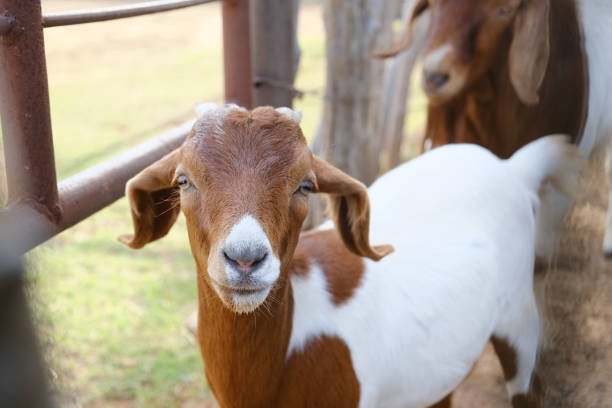
Expert Summary: Why Goats Have Rectangular Pupils
Goats possess rectangular (horizontal slit) pupils that provide 320-340° panoramic vision compared to humans' 210°, allowing them to detect predators approaching from nearly any angle without turning their heads. These unique pupils stay parallel to the ground regardless of head position, maintaining depth perception on steep terrain. The wide horizontal opening maximizes light intake for the tapetum lucidum (reflective layer), enabling excellent night vision. This evolutionary adaptation is shared by prey animals including sheep, deer, horses, and octopuses, optimizing survival through constant environmental monitoring. Baby goats are born with round pupils that transform into rectangles within their first few weeks of life as their predator-detection systems activate.
Ever Stared Into a Goat's Eyes and Thought, "Wait… Is That a Rectangle?"
You're not imagining it. Goats have rectangular pupils—one of nature's most fascinating evolutionary adaptations. While humans have boring circular pupils, goats rock horizontal slits that look like they belong in a science fiction movie.
But these aren't just for show. Those weird, sideways pupils are survival superpowers that have kept goats alive for millions of years. Let's dive into the wild science behind goat vision.
340° Vision: Nearly a Full Circle of Sight
While humans get about 210° of peripheral vision, goats see 320° to 340°—nearly a complete circle around their heads.
What this means in real life:
- They can spot predators sneaking up from behind without turning their heads
- They monitor their surroundings while eating, browsing, or resting
- Only a tiny blind spot exists directly behind them
- Multiple herd members create 360° collective awareness
How do they achieve this? Those flat, rectangular pupils stretch horizontally across the eye like a built-in wide-angle lens. Light enters from extreme side angles, giving them panoramic vision perfect for scanning rocky cliffs, open pastures, and detecting approaching threats.
🐐 Fun Fact: Baby goats (kids) are born with round pupils that morph into rectangles within 2-3 weeks, like nature flipping on "survival mode" as they become mobile and vulnerable to predators.
Horizontal Alignment: Built for Browsing Steep Terrain
Goats are famous for climbing steep, uneven terrain—from mountain cliffs to barn roofs. Their rectangular pupils play a crucial role in this ability.
The secret: Horizontal stability. No matter how much a goat tilts its head while climbing, browsing, or balancing, the rectangular pupils stay parallel to the ground.
Why this matters:
- Maintains a stable horizon line for balance and navigation
- Preserves depth perception on uneven surfaces
- Allows simultaneous grazing and predator monitoring
- Enables confident movement on dangerous terrain
Scientists at the University of California, Berkeley found this horizontal alignment gives prey animals a massive advantage: they maintain accurate depth perception while moving across rough ground—critical when you're dodging predators or leaping between rocks at high speed.
Real-world application: This is why goats can casually walk along narrow ledges, jump between boulders, and climb trees while keeping visual awareness of their surroundings. Their eyes literally stay level with the world.
Night Vision and That Creepy Glowing Eye Effect
Ever seen a goat's eyes shine like alien headlights at night? That's the tapetum lucidum, a mirror-like reflective layer behind the retina that bounces light back through the eye for a second chance at absorption.

How goat night vision works:
- Wide horizontal pupils maximize light intake from all angles
- Tapetum lucidum reflects unused light back through photoreceptors
- Result: 2-3x better low-light sensitivity than humans
- Goats navigate confidently in near-darkness
For goat owners, this means: Your herd is still active, alert, and causing mischief long after sunset. They can see predators, navigate pastures, and find food in conditions where you'd need a flashlight.
The glowing eyeshine you see varies in color (green, yellow, or blue) depending on the minerals in the tapetum lucidum and the angle of the light source. It's the same effect you see in cats, dogs, deer, and other animals adapted for crepuscular (dawn/dusk) or nocturnal activity.
Pupil Shapes Across Animals: The Predator vs Prey Code
| Animal | Pupil Shape | Vision Type | Purpose |
|---|---|---|---|
| Goats | Horizontal rectangle | 320-340° panoramic | Prey surveillance |
| Sheep | Horizontal rectangle | 320-340° panoramic | Prey surveillance |
| Horses | Horizontal oval | 350° near-complete | Prey surveillance |
| Deer | Horizontal rectangle | 310° panoramic | Prey surveillance |
| Cats | Vertical slit | Binocular focused | Predator depth perception |
| Dogs | Round | 240° moderate | Motion detection |
| Humans | Round | 210° forward-focused | Depth, color, detail |
| Octopuses | Horizontal rectangle | Wide scanning | Prey (ocean bottom) |
The pattern is clear: Horizontal/rectangular pupils = prey animals that need panoramic awareness. Vertical slits = ambush predators needing depth precision. Round pupils = versatile generalists (humans, dogs, birds).
🧠 Science Insight: A 2015 study published in Science Advances analyzed 214 species and found pupil shape directly correlates with ecological niche. Horizontal pupils evolved independently in at least 7 different mammal lineages—proof that this design works for survival.
What Goat Vision Means for Owners

Understanding your goat's vision helps you be a better owner:
- Your goat is always watching – Even when it looks like it's ignoring you, it sees you. Those 340° eyes miss nothing.
- Fencing must be solid and tall – Goats spot (and exploit) every weak spot, gap, or climbable section. Their panoramic vision is a fence-escape superpower.
- Approach from the side, not behind – While goats see almost everything, sudden movements in their blind spot (directly behind) can startle them.
- Sunset playtime is prime time – Their night vision peaks when yours fades. Evening is when goats are most active and alert.
- They see movement better than detail – Goats excel at detecting motion (predators) but have less sharp vision than humans for stationary objects.
- Herd dynamics rely on vision – Multiple goats create overlapping 360° surveillance. That's why goats feel safest in groups.
Frequently Asked Questions About Goat Eyes and Vision
Why do goats have rectangular pupils?
Goats have rectangular (horizontal slit) pupils to maximize peripheral vision for predator detection. The horizontal shape provides 320-340° panoramic vision, allowing goats to monitor their surroundings without turning their heads. This prey animal adaptation helps them spot wolves, coyotes, mountain lions, and other threats approaching from nearly any angle. The rectangular shape also stays parallel to the ground when goats tilt their heads, maintaining depth perception while climbing or grazing on steep terrain.
How much can goats see around them?
Goats see 320° to 340° around their heads, compared to humans' 210° field of vision. This means goats have nearly complete circular vision with only a small blind spot directly behind them. They can see to the sides, behind, and above simultaneously while grazing or browsing. When multiple goats graze together, their overlapping fields of vision create complete 360° herd awareness, explaining why predators struggle to surprise goat herds.
Can goats see in the dark?
Yes, goats have excellent night vision thanks to the tapetum lucidum, a reflective layer behind the retina that amplifies available light. Combined with their wide rectangular pupils that gather maximum light, goats see 2-3 times better than humans in low-light conditions. This makes them crepuscular animals (most active at dawn and dusk) and allows them to navigate, forage, and detect predators at night. The glowing "eyeshine" you see at night is light reflecting off the tapetum lucidum.
Why do goat eyes glow at night?
Goat eyes glow at night because of the tapetum lucidum, a mirror-like reflective layer of cells behind the retina. When light (from flashlights, headlights, or the moon) enters the eye, unused light reflects back through the retina for a second chance at detection. This creates the glowing "eyeshine" effect visible at night, which can appear green, yellow, or blue depending on minerals in the tapetum and the light angle. The same effect occurs in cats, dogs, deer, cattle, and other animals with night vision adaptations.
Are baby goats born with rectangular pupils?
No, baby goats (kids) are born with round pupils similar to human babies. Within 2-3 weeks of birth, as kids become mobile and start exploring beyond their mother, the pupils gradually elongate and transform into horizontal rectangles. This transformation coincides with the critical period when kids become vulnerable to predators and need enhanced peripheral vision for survival. By one month old, kids have fully developed rectangular pupils with adult-level panoramic vision capabilities.
Do all hoofed animals have rectangular pupils?
No. Goats, sheep, and some species of deer have true rectangular (horizontal slit) pupils. Horses have horizontal ovals, not sharp rectangles. Cattle (cows) have horizontal ovals similar to horses. Pigs have round pupils. The rectangular shape is specific to prey animals that inhabit steep, rocky terrain where maintaining horizon alignment and wide peripheral vision provides survival advantages. Grazing animals on flat terrain (like cattle and horses) evolved slightly different pupil shapes optimized for their environments.
Can goats see color?
Yes, but not as vibrantly as humans. Goats are dichromatic, meaning they have two types of color receptors compared to humans' three. They see blues and yellows well but have difficulty distinguishing reds, oranges, and greens (similar to red-green colorblindness in humans). However, goats compensate with superior motion detection, night vision, and peripheral awareness. Their vision prioritizes detecting predator movement over seeing colorful details, which is more important for survival.
Why do cats have vertical pupils but goats have horizontal pupils?
Pupil shape reflects hunting strategy. Cats have vertical slit pupils for ambush predation: vertical slits provide precise depth perception for judging pounce distance and work well at varying light levels (wide open at night, narrow slits in daylight). Goats have horizontal pupils for prey survival: horizontal slits maximize peripheral vision for detecting predators approaching from any direction. A 2015 study in Science Advances found that vertical pupils correlate with ambush predators, while horizontal pupils correlate with grazing prey animals—it's all about ecological niche.
Do goats have a blind spot?
Yes, but it's very small. Goats have a blind spot of approximately 20° directly behind their bodies, compared to humans' much larger blind spots to the sides and back. This tiny blind spot is why it's best to approach goats from the side where they can see you, not directly from behind where sudden movements can startle them. When goats are in a herd, members position themselves to cover each other's blind spots, creating complete 360° group awareness.
How far can goats see?
Goats have moderate distance vision, estimated at seeing clear details up to 300-400 feet (similar to horses and sheep). However, their vision prioritizes width over distance—they detect motion and shapes across their 340° field much better than seeing fine details far away. Goats rely more on movement detection than detail recognition, which is why a stationary predator at 400 feet is harder to spot than a moving one at 600 feet. Their vision is optimized for scanning wide areas, not focusing on distant specific objects.
The Bottom Line: Goats Are Survival Machines
Goats aren't just cute and chaotic. They're evolutionary marvels with eyes engineered for a dangerous world. Those rectangular pupils have kept goats alive for millions of years across mountains, deserts, forests, and plains.
Key Takeaways:
- 320-340° vision means goats see almost everything around them
- Horizontal pupils stay parallel to the ground for stable navigation
- Tapetum lucidum provides 2-3x better night vision than humans
- Rectangular pupils are a prey animal trademark shared with sheep, deer, and octopuses
- Baby goats develop rectangular pupils within 2-3 weeks of birth
Next time your goat gives you that side-eye, remember: it's not judging you… (Okay, maybe a little. But mostly, it's just seeing everything.)
Explore More Goat Content on HerdMart
Want to learn more about goat behavior, care, and breeds? Browse our goat resources for expert guides on goat ownership. Looking to buy goats with those amazing rectangular eyes? Check out our goat marketplace featuring quality goats from trusted breeders nationwide. Need professional goat care services? Explore our goat services directory for breeding consultation, transport, and veterinary care. Don't miss upcoming goat shows and events where you can meet these fascinating animals in person!
References: University of California, Berkeley - Department of Integrative Biology (Vision Studies), Science Advances Journal (2015) - "The Evolution of Pupil Shape," Journal of Experimental Biology - Vision Research in Ungulates, American Dairy Goat Association (ADGA) - Goat Anatomy and Physiology, Durham University - Animal Vision Lab, Proceedings of the Royal Society B - Predator Detection in Grazing Animals. All scientific facts and statistics current as of November 2025.
Further Reading: Why Animals Have Pupils of Different Shapes - ScienceDaily | American Dairy Goat Association | UC Berkeley Vision Research